Thursday, December 7, 2023

Final Post: My Relationship with Technology


Every day I rely on the technology around me to get things done. Whether it is a homework assignment, or reaching out to my mom to see how things are back home, technology is a part of my everyday life.

One day I worry that I will not know what to do without the technology I rely on to get things done. This frightens me.

My relationship with technology could be better. I use my computer a lot to do my homework assignments and my phone to scroll through social media when I don't have anything else to do.

I am not so addicted to my phone that I am on it when I am walking to class or when I'm eating dinner with friends or my family. I just worry that I should be on it less than I am.

I believe that technology is misleading me and giving me false information. What I see through a lens on social media is not always the truth, and I should not believe whatever someone says on social media.

Social Media has been known to spread false information. It does not take news seriously, it is treated as a way to spread information, whether it is true or not.

I worry that people have accepted that false news being spread through social media is a part of our lives. It should not be, we should not be okay with receiving false information. 

I believe that technology has played a negative role in my mental health. The majority of people in my generation have to have the latest technology or they won't be able to "fit in" with everyone else.

Technology has created pressure for me to constantly be connected and keep up with what is going on in the world.

Whenever I get a notification, I feel like I have to check what it is. If I don't check it, I feel that there is something that I am missing out on.

When I see that I am missing out on something a lot of people are posting about, it makes me more depressed. A lot of people have reported feeling this way, and it keeps getting worse.

I believe that it does not have to be this way. If people are more aware of the effects of technology and what we can do to prevent it, it can get better.


Technology also affects my friends and family. I believe my family is not very affected by technology and my friends are impacted negatively.

My family does not spend a lot of time using technology or social media, so it does not affect them very much. They want to do things together and live in the moment, enjoying each others company because they realize we can not truly get to know each other if we are on our devices constantly.

Due to this, I believe that technology plays a positive role in our relationship. It makes us realize that we can not truly connect face-to-face if we are all on our devices.

However, my friends are on their devices constantly. They do everything using technology and probably would not know what to do without it.

I believe this plays a negative role in our relationship because technology is a part of them, and they cannot do anything without it. If they did not have technology, they would not know how to communicate with the outside world.

My technological footprint is almost non existent. When I Google myself, I cannot find any information about myself and other people who have the same name as me appear instead of myself.

I am proud of this because I try to not have too many social media accounts or be online as much as everyone else.

Now that I realize that technology negatively impacts me, I am going to limit its involvement in my life as much as I possibly can. If I limit its involvement in my life as much as possible, then it can not affect me as much.

Thursday, October 19, 2023

Blog #10: Living in the Age of AI


Artificial Intelligence (AI) is a wonder. It has developed vastly over the years and it has helped people in many areas, but it has also created a vast number of problems.

In the video we watched in class, I learned a lot about AI. AI is becoming increasingly scary with every new task it can do.

To understand how Artificial Intelligence is able to do almost any task a human can do, it has to have data to read and analyze. Where does the data it is fed come from? Every citizen.

Due to AI becoming better, it is taking over things like the work force. Jobs that are normally performed by a human can be performed faster and cost less if it is performed by a machine.

Most companies like this alternative because they do not have to pay a machine to do the same job a human would. The cherry on top for companies is that machines have a greater productivity rate than humans.

This means that companies can make more money from machines than they would if they paid a human to do that exact same job. These facts are scary.

While it is beneficial to society that companies make enough money to stay in business, these machines are coming for our jobs. In the coming years, more jobs will be performed by machines and humans will not be needed to complete the need for specific jobs.

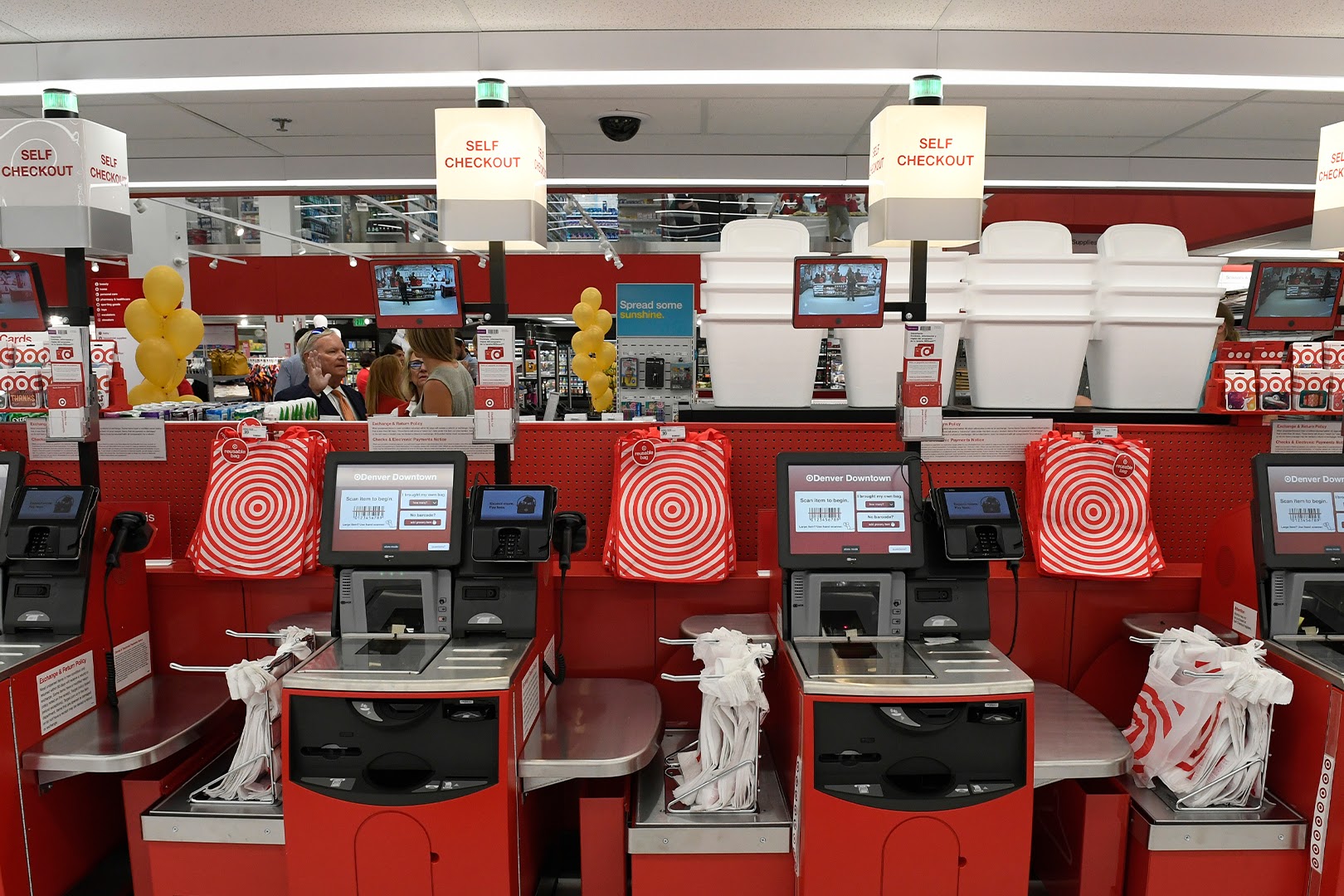
It has become normal to see self-checkouts in every store instead of being checked out by a person. There are benefits to this and downsides that come with it.

Some of the benefits that stem from Artificial Intelligence is automation, medical progression, perform repetitive tasks, and minimizing errors. These are just a few of the benefits that AI brings us.

Automation is made easier by Artificial Intelligence because AI can set up machines to follow commands very quickly. A computer can do a repetitive task over and over again without getting tired, unlike a human.

AI can minimize errors because computers are able to do math quickly, efficiently, and in a timely manner. If humans had to do math constantly, they are liable to make errors in calculations.


Also, when building machines or products, it is important to get the design correct. Even if there is a slight error in the building process, it could be costly.

Automation scares me due to the amount of jobs that have been lost because of it. When someone loses their job, which is their source of income, it can be extremely hard to recover from that.

Furthermore, AI when dealing with the topic of automation means that the rich get richer and the poor get poorer. Automation takes money away from hard working people and gives it to the rich who created or bought into the machines.

AI also impacts national security. While AI can be used to strengthen defense systems and find flaws in the system to further improve them, there are also downsides to it.

In order for AI to improve national security, they have to know exactly what is going on in their country at all times. China is a great example of this.

China tracks their citizens wherever they go. They have a project called Sharp Eyes, which is being used to put cameras on the corner of every street and village.

China believes that if they know what every one of their citizens is doing at every moment of the day, then it will make them a more secure nation. The downside to this is that no citizen has any privacy from the government or the ability to speak out against the government. It gives the government a new way to silence people that did not exist before.

Also, China has used this surveillance system to punish people of a certain ethnic group and scan the country for people who need to be "re-educated". Re-education camps are a way for the Chinese government to force or try to convince people to behave, believe, or act a certain way.

This leads me to my last point about AI, online security. Due to AI needing to collect people's information/data they leave online, it takes away privacy and security people believe they have when they are online.


In the video, it was stated that Google found out that whenever users would make a search, they would leave bits of data left behind. This was a gold mine for Google.

Google realized just how valuable this information could be if they sold it to third parties and investors began pressuring Google to make more money so they could make more money. Not only this, the data users left behind when they made a search was used in computer algorithms to predict what people would likely search.

Now, anyone can get a piece of the action if they have enough money and are willing to buy into it. This means that it is not just big companies who have their hands on your information, it could be millionaires and billionaires as well.

Companies want to collect every piece of information their is to collect about a person. It ranges from credit card data to information about women's menstrual cycles.

Some important things I learned from the video was to be careful about what you post online because you never know how it is going to be used. Also, I learned that AI can affect my life more than I thought it could because of everything it capable of doing.

What scares me is knowing that AI continues to improve everyday and knowing that it does more than I am comfortable with. There should be limits to AI so it does not derail everyone's life and we do not know what to do without it.


Blog #11: 2nd EOTO Reactions


During our 2nd EOTO presentations, I learned a lot. What interested me the most was the topic of online influencers.

Often, we follow people on social media who are popular and sometimes we do not know why these people became popular. It is as if we woke up one day and suddenly people became famous overnight.

For example, I never knew how Kim Kardashian became famous but it seemed as if she became famous overnight. All of the sudden, the Kardashian's were famous for doing nothing. They had a reality TV show that was simply about them living their lives.

People found pleasure in watching other people do nothing, which is mind boggling. Influencers should be known for doing something that makes a positive impact on the world.

I learned that the first online influencers were "mommy bloggers". These were moms that shared their advice and routines with other moms who needed advice on what to do with their child.

In other words, mommy bloggers were moms that became famous for giving advice to others on the internet. Other moms enjoyed being able to communicate with fellow moms and getting advice when they were not sure what to do.

Online influencers have a lot of power since they are famous. This means they can use their power to do positive things like charity work, PSA's (public service announcements), and provide entertainment for the every day citizen.


On the downside, online influencers can sway people's opinions due to the large followings they have (since people think they are credible), and they can promote hate crime. On top of this, people's political opinions can also be swayed by an online influencer because people believe that they have credibility on politics when they are merely sharing their opinion.

Being an online influencer puts a lot of power into the hands of an ordinary person. Having so much power over people can turn out good or bad. It is all decided on how the influencer chooses to use their power.

They can bring attention to important issues that are not talked about enough by the public and it is good to raise awareness on issues that are not being talked about enough. Often, people twist influencers words and then a false idea is spread, which can damage the image of an influencer.


Wednesday, October 4, 2023

EOTO #2: Total Information Awareness


Total Information Awareness (TIA) was a project created after September 11th, 2001 to be able to track global terrorists movements online. TIA was created by a branch of the Department of Defense's Defense Advanced Research Projects Agency called the Information Awareness Office.

The idea for Total Information Awareness was invented by John Poindexter, a Reagan administration official. His idea for it was to "access all sorts of digital information from just about anywhere".

There was an interview that asked Poindexter about his ideas for Total Information Awareness, how it started out, and how it became what people know it as today.

The goal of TIA seems harmless, until you learn what has to be collected from citizens to achieve this. TIA collects every piece of information that can be tracked online for it to be analyzed by computers to determine if any of it resembles suspicious or terrorist activity.

Any information that can be collected is. From credit card transactions to text messages and call logs, the government collects it all.

Then the information is fed through computers or robots to seem if it resembles terrorist or suspicious activity. However, the government holds on to this information and it is not deleted after the robots are done scanning it.

This means that the government holds on to this information just on the off chance they need to use it in following years, without the public knowing about it. Every digital action or purchase you make is never deleted and follows you for the rest of your life.

As seen above, the logo resembles the Illuminati, which was unsettling with people. It gave people the feeling that they were being watched constantly by the government and they had no privacy.

In 2005, it was discovered by a reporter that worked at the New York Times that major phones companies such as Verizon and AT&T were giving the NSA unprecented access to Americans' telephone and internet communication.

When the public discovered this, they were outraged. They felt that their privacy was being violated by the government and that they were not planning on telling the public that they were doing this if they were not caught.

In recent years, it was discovered that President Bush authorized this. People found it hard to believe that they could trust the government and the President if they authorized such an insane request.

The public's outrage over the Total Information Awareness program led Congress to the decision to defund it. However, reporters have found that TIA has lived on through different names in order to continue with their end goal.

One of the different names TIA took on after it was defunded by Congress was PRISM

The government hid the continuation of TIA by moving their budget over to the "black budget". This is the side of the government budget that they do not want the public to find out about, so they try to keep it a secret.

Today, we have a similar program called CAPS II. This program collects massive amounts of information or data on citizens in order to create profiles on Americans that take flights.

This program is still based on the premise that terrorism can be prevented by collecting massive amounts of information about everyone and then running it through computers or robots to see if they flag anything.

Even though the government claims to stop these programs, they will always try to keep them going. By keeping them going, the government retains its power it holds over the American people by collecting all of their data.

Wednesday, September 27, 2023

Blog #8: It's Time to Freak Out About Privacy


Your online life, permanent as a tattoo

In this video, Juan Enriquez spoke about how things you post online and on social media are never erased. The things you say and post online never go away, they are permanent and stay there forever.

These issues affect me because most of the time I do not think about what I post on social media and that even if I delete it, it will never be deleted. This means that pictures of me doing things I love and pictures of me with my family will never be deleted and could be used for marketing purposes.

The government should be telling citizens what they will be doing with the things we post or say online because we consider this to be private. Meanwhile the government believes they can do whatever they want with our information because we agree to terms when we join social media apps.

To protect ourselves from our pictures and things we say being used for purposes we did not agree to, we should think about what we are posting online before we post it. Ask yourself, "Do I want this picture to stay online and follow me forever?"


In the second video, Catherine Crump talks about NSA survelliance equipment that has made its way to small towns to track your everyday movements.

This affects me because when I am home visiting my mom, I get in her car and we drive where we need to go. This means that pictures have been taken of me and my mom when we drive to the store or to a friends house.

The government should be telling local police departments to not hold on to the data or pictures they have of people's license plates if they did not do anything wrong because that is simply tracking our every movement. People did not sign up for this.

In the third video, Christopher Soghoian discusses how the phones in our pockets are surveilling us. Every phone call and every text message we make is being tracked by our phone companies.


Cell phones were built with the ability to track these things first, then came the ability to call and text someone. Cell phone companies wanted to track us before they gave us a service.

These issues affect me because I make phone calls and text people every day using my cell phone. Now knowing what my cell phone company is collecting every time I make a phone call or send a text message makes me more conscious of what I say over the phone or in a text message.

The government should be telling cell phone companies that they cannot listen to our phone calls or collect and read our text messages because we did not give them permission to do that. People trust that their phone calls and text messages are a private conversation between them and other person, not including their phone company.

To protect ourselves from this invasion of privacy, people can do research on when their phone company listens to their conversation and how they record these calls and what they do with them. Phone companies should answers our questions about how they listen to our conversations.


In the fourth video, Darieth Chisolm talks about revenge porn. Revenge porn is when someone cannot physically harm you, so they post nude pictures of you in order to harm you online.

This affects me because I am a woman under 30 years of age and statistically those are the people most prone to be affected by revenge porn. Also, it makes me wonder if intimacy can be achieved knowing these odds.

The government should be trying to pass laws that would make the consequences of revenge porn more serious. Currently, someone would get a $500 dollar fine if they were found posting revenge porn of someone.

It is technically currently considered a civil dispute. A $500 dollar fine is like a slap on the wrist to people who partake in ruining lives that cannot be rebuilt.

Blog #7: Diffusion of Innovations Theory


 The diffusion of innovations theory is an interesting and efficient way to explain why things become popular and the cycle they go through.

I believe the Kindle became popular because it gave book lovers everywhere a new and improved way to read books online. Kindle's main purpose was to create a comfortable e-reading experience for book lovers everywhere.

The reason the Kindle caught on and spread was because people were interested in the idea of an e-reader that would change the way reading online is done. People had faith in the idea and invention, which made it catch on.

So many people became early adopters of the Kindle because they wanted to see if this device would change e-reading and make it an enjoyable experience. Also, there was a lot of readers who were willing to try the new device.


Some people were late adopters because they did not have faith that the Kindle would work and solve the discomfort of e-reading. Also, the idea of e-reading was still relatively new in the late 2000's and some people were not sure it was going to stick around.

The downsides about the Kindle is that it is basically a tablet designed specifically for reading. Some readers (including myself) like the feeling of holding a book in your hands because it gives you a different experience while you read.

Reading a book on a device versus from a book you hold in your hands takes away the experience of reading a book for the first time and feeling the pages between your fingers as you turn them. Lastly, some people do not want to have to buy a device in order to read a book, there are other cost effective ways to read a book.

I believe the positives would outweigh the negatives with this communication technology because of the benefits it has had on e-reading. When you look at the positives versus the negatives with the device, it has more positive impacts than negative ones.

Blog #6: Antiwar Voices


After viewing the websites Antiwar.com and The American Conservative, I can see they have strong antiwar voices and that I have never heard of these websites before today.

Mainstream news, such as ABC News and CBS News, promote certain ideas or one side of the arguement. They promote ideas the government wants us to hear, which means we never hear the opposing ideas unless we look for them.

By only hearing ideas the government wants us to hear, we are blind to issues or topics that affect us. It is almost like the government is attempting to censor certain stories or ideas they do not want the American people to be aware of.

For example, Antiwar.com reports on casualities in Iraq/American deaths since the war began in 2003. This information cannot be found on mainstream news sites because the government does not want the American people to be aware of it.

If the American people knew about the American deaths in Iraq, they would want answers as to why there were kept in the dark about it and the American government does not want to deal with this.

I believe that we have to seek out obscure websites in order to hear strong antiwar voices because the government attempts to silence news that disagrees with what they want the American people to hear. The government does not want to have the American people rebelling against their ideas because they like being able to control us.


Even though it goes against the First Amendment to silence people's ideas just because they are different than yours and pose no imminent threat, it does not mean the United States government will not try to do it.

The government will do just about anything to keep their power over the American people, even silencing antiwar news that goes against the ideas they want to keep feeding to the American people.

Tuesday, September 26, 2023

Blog #5 EOTO Technology Presentations


A technology I learned more about during the EOTO presentations was the Radio.

The Radio changed communication technologies forever. Now people had a way to hear about news right after it happened and not have to wait a few days to read about it in the paper.

The first idea to build the radio occured in the 1890's by an Italian inventer named Guglielmo Marconi. By the late 1890's Marconi had received the official British patent for the radio.

There were other inventors working towards success with the device, but Marconi was the first to acheive success with the radio.

The Radio did not begin to become popular until the 1920's, during World War 1. During the first World War, the Radio was extremely useful with getting information to citizens about the war and what they needed to know.

Churches began to use the Radio to broadcast church services. People no longer had to go to church to be able to listen to the service. People were now able to receive information faster than before.

The Radio also benefited the government. Now the government was able to speak directly to the people, especially during the war.


The government was able to tell the people what they wanted them to hear, which was very important during war time. 

Soldiers were able to obtain information from the government regarding enemies, and if there were any incoming attacks they needed to prepare for.

Soldiers used to have to wait days or even weeks to receive news. Now, they could receive it in a short amount of time.

The radio helped save countless soldiers during the war because of the warning they received from the government.

People did not want to wait days to hear about events occuring in the World War. They wanted to know about things instantly and the Radio helped accomplish this.

Sunday, September 10, 2023

Blog #3: Eight Values of Free Expression

After reviewing the 8 values of free expression we discussed in class, Promote Innovation was a value that resonates most with me. This value discusses the important of the Freedom of Speech and how we, as a society, can learn from all kinds of speech.


The Freedom of Speech feels most important to me because if people were not allowed to express their thoughts and opinions, then we would be stuck hearing the same ideas from people in power and be punished for simply stating what we think. Everyone thinks
differently and has different ideas about various topics, which is what helps us learn and understand each other. Without difference of opinion, we would all sound the same and not be able to advocate for change in society. People would be punished for expressing their ideas and be silenced by the government.


Out of the Eight Values of Free Expression, I see Promote Innovation and Protect Dissent in action today. A lot of people have expressed their dislike over Jason Aldean's song "Try That In A Small Town". Some people have started protesting their dislike for the song, by burning the American flag, saying that "America was never great". People are encouraged to express their opinions and ideas over dislike or appreciation of certain things and decisions made.

As we discussed in class, since the people who burned the American flag were doing it in an act of protest over Jason Aldean's song, it is protected by the First Amendment.


Even if the group protesting the song had minimal support, their opinion is protected by the First Amendment, no matter how many people disagree with them. It is the right of the protesters to criticize the government, and say why they do not agree with them and what they think the government should do to change.

Blog #2: The US Supreme Court


In the United States, the Supreme Court has a lot of power. They interpret the Constitution and ensure that everyone has equal justice under the law. The Supreme Court resides in the Judicial branch, ensuring no one branch of government has too much power.

After watching videos Part I and Part II on the Supreme Court, it reminded me of some things I already knew about the Supreme Court and taught me some things I did not already know about the Supreme Court.

I learned that in the history of the United States, there have been just over 100 justices that served on the Supreme Court. Justices have to be nominated by the President when there is a vacancy and then the nomination is voted on by the Senate. For the nomination to be approved, there has to be a majority. Otherwise, the nomination is not approved.


The most important take-away point about the Supreme Court is that the Justices are not Gods or supreme beings. They are just people who are tasked with interpreting the Constitution and making sure that every person in the country has the opportunity for their voice to be heard if they petition a case. Justices are merely people who have dedicated their lives to helping others through their work.

The most surprising thing I learned was that every petition that is brought to the Supreme Court receives the same amount of consideration. The Supreme Court receives over 100 new cases a week, about 7,000 cases a year. With receiving such a large number of petitions, I thought that some cases would be chosen over others based on who wrote the petition, but this is not true. Every case receives the same amount of consideration, meaning that every case has the same opportunity to be heard by the Supreme Court.

The video changed the way I thought of the Supreme Court because I thought of the Justices as supreme beings who were above everyone else because of what they do. Now, I think of the Justices as mere people who have a very important job that affects a numerous number of peoples lives. The decisions Justices make are extremely important and the decisions they make can affect everyone that lives in the United States, for better or worse.

Blog #1: My Top 5 Sources of News and Information

When I was younger, I did not think it was important to look at the news every day. My mom would tell me what was important and I thought that was all I needed to know. 

As I got older, I realized that I need to stay informed on what is going on in the world around me so I could learn about important issues and if there would be anything going on in my area that would affect me. Here are my top 5 sources of news and information... 

1. Samsung News 

Samsung created a news platform for their users to have on their devices. This is convenient, as I only own Samsung devices.

I have found Samsung News to be very useful as I do not have to go to a website to view the latest news. I just open the app on my phone and I can go to a specific category if I want to view news for sports, entertainment, trending news, and news picked "for you".

When I open the app, it gives me a briefing for the day. It will show me top stories I may be interested in, and it will show me smaller stories that are important which I may not hear about on major news networks. 

The platform is simple and easy to use, which makes it my go-to source of news and information. The Trending News section articles help keep me updated with what is going on in the world today. For example, I was able to learn about a secret child Elon Musk and Grimes had but kept a secret.

2. Instagram


Instagram is not only a social media platform, it provides news as well. I can follow major news networks, like ABC and Fox News to view the latest news, or see news while I am scrolling looking at other people's posts.

This is where I got to watch Charles III be crowned as England's new monarch. This was a historic moment for England and being able to watch the ceremony on Instagram was very interesting.

It is convienient and easy to use. If I want to look at the latest news, I can. The amount of news I receive on this platform is in small, bite-size pieces that are easy to digest.


3. Snapchat

When I am responding to friends messages and pictures, I will often look at the "Discover" section under the Stories page on Snapchat. 

This section lets users view their friends stories and gives stories about important events going on in the world.

For instance, I can view stories on politics and what decisions the President has made lately (Good Luck America) and what discoveries have been made in science recently.

The stories are short and to the point, which helps me understand the events and it is easy to watch multiple stories to get updated with what is going on in the world within a matter of minutes.

4. Friends and Family


Often, I do not look at the news as much as I would like to. There is a lot that goes on in my day-to-day life and I cannot spend at least an hour going through the news every day.

However, I talk with my friends and family daily. They tell me about breaking news stories they have seen from watching the news at night, or a story that popped up on social media.

My friends and family tend to see different news than I do, because they spend more time looking at the news on a daily basis. Meaning, I hear about smaller stories that I would not hear about otherwise. 

For instance, my neighbor tells me about news occuring in my hometown, as I am not able to keep up with that as easy as when I'm in my hometown. Today she told me about the request from the University of South Florida being approved for an on-campus football stadium.

5. Google News

I often spend a good amount of time each day looking things up on Google. Google helps me find answers to my questions and gives me breaking news stories when I do not want to visit my other sources of news and information.

The top stories section gives me a rundown of what is occuring in the world without having to go searching for the stories myself. Google always seems to know what's going on around the world.

Google News also has sections that give news for the United States, the World, local news, business, technology, and more. This platform breaks down the news into sections if you only want to focus on a specific category and not others.

EOTO: How the Kindle Changed Digital Reading Forever


The Amazon Kindle is a lightweight device that was created to bring digital reading to everyone, no matter where they live.

In August of 2004, CEO of Amazon, Jeff Bezos, and senior vice-president Steven Kessel were exploring the idea of creating an e-reader and brought on Jateen Parekh, a systems engineer, who worked in Silicon Valley at Replay-TV and Philips Research. Parekh's knowledge was useful as he had worked on similar technologies before.

The first Amazon Kindle was released in 2007 by a team at Amazon. They set out to solve the problem of making digital reading comfortable for their users. Bezos wanted the Kindle to be simple to use, and did not want to complicate it with the device being able to connect to Wi-Fi networks. He wanted non tech-savvy people to be able to use this e-reader as well.

Due to nothing like this being attempted before, there had to be cellular access embedded into the device, which was considered impossible at the time. It took three years of trial and error to get the Kindle up and running. Not only were there problems with the screen of the device, but the company that was set to provide the wireless chips (Qualcomm)

 was sued by a competitor. This set everything back for months.

When the Kindle was released in 2007, Amazon underestimated the demand for it. The first batch sold out within hours of it's release. People were curious about this device and could not get enough of it. Having access to 90,000 books through a device was revolutionizing.

When purchasing the first Kindle, customers received a thank you note for their purchase and had the ability to provide feedback to Amazon about their device. This greatly helped the creators make improvements in later models of the Kindle.

About 2 years later, Amazon released another model of the Kindle, Amazon Kindle 2. This model has a button layout that was less complicated than the original, longer battery life, improved technology for faster page turns and better refreshing, a feature called "read to me" that allowed the device to read to the reader, and a storage boost to accommodate thousands of more books. 

In March of 2009, the free Kindle app was launched. This allowed readers to read from anywhere on an iPhone and iPod touch, without a Kindle device. Customers no longer had to buy a Kindle to get the e-reader experience. They could read from their iPhone and iPod without having to spend any money.

Amazon did not just stop here. A few months later, in October of 2009, Kindle went global. Now people all around the world could purchase a Kindle or read in the app and have access to hundreds of thousands of books in over 30 languages on iOS, Android, PC, and Mac devices.

Advancements continued when Amazon announced the launch of the Kindle app for Android devices in June 2010. Now Android users could enjoy the experience of reading books in the Kindle app without having to purchase a Kindle. Android devices were able to be turned into a book and users could read anytime, anywhere.

Amazon continued to make new models of the Kindle in the following years. They added features such as WiFi connectability, access to more books, touch control, more storage, longer battery life, illumination to the display, and much more.

The world was changed forever with the Kindle. People no longer had to buy books to read them. Now they could read them from the comfort of their own home, with just the touch of a button.

Final Post: My Relationship with Technology

Every day I rely on the technology around me to get things done. Whether it is a homework assignment, or reaching out to my mom to see how t...